作者: Joshua Hardwick, Sam Oh, Ryan Law


Head of Content @ Ahrefs (or, in plain English, I’m the guy responsible for ensuring that every blog post we publish is EPIC).
内容主管 @ Ahrefs(或者,用简单的英语来说,我是负责确保我们发布的每篇博文都是 EPIC 的人)。
Get the week’s best marketing content
获取本周最佳营销内容
Email Subscription
To rank in search engines, you need to create content that searchers and search engines want to see.
要在搜索引擎中排名,您需要创建搜索者和搜索引擎希望看到的内容。
Keep reading to learn why this is important and how to create SEO content from start to finish.
继续阅读以了解为什么这很重要以及如何从头到尾创建 SEO 内容。
Contents 内容
 1. SEO content basics 1. SEO 内容基础
 2. How to create SEO content
2. 如何创建 SEO 内容
SEO Guide SEO 指南
-
4SEO Content SEO 内容
Part 1 第 1 部分
SEO content basics SEO 内容基础知识
What is SEO content? 什么是 SEO 内容?
SEO content is content designed to rank in search engines. It could be a blog post, product or landing page, interactive tool, or something else.
SEO 内容是旨在在搜索引擎中排名的内容。它可以是博客文章、产品或登录页面、交互式工具或其他内容。
Why is SEO content important?
为什么 SEO 内容很重要?
Not all content ranks and gets traffic from organic search. Only content crafted for searchers about topics they’re searching for does (unless you get lucky).
并非所有内容都对自然搜索进行排名并从自然搜索中获得流量。只有为搜索者制作的关于他们正在搜索的主题的内容才会生效(除非你运气好)。
Part 2 第 2 部分
How to create SEO content
如何创建 SEO 内容
Crafting SEO content is about giving searchers what they want and making it “sticky.” If you can share unique insights and expertise on top of that, even better. Let’s go through the process in more detail.
制作 SEO 内容就是为搜索者提供他们想要的东西并使其具有 “粘性”。如果在此基础上能分享独特的见解和专业知识,那就更好了。让我们更详细地了解一下这个过程。
1. Choose a proven topic
- 选择一个经过验证的主题
You should already have a proven topic if you’ve done keyword research. This is something with traffic potential, business potential, and ranking potential:
如果你做过关键词研究,你应该已经有一个经过验证的主题。这是具有流量潜力、商业潜力和排名潜力的东西:
- Traffic potential: can generate enough visits to make the effort of creating content worthwhile.
流量潜力: 可以产生足够的访问量,使创建内容的努力变得值得。 - Business potential: allows you to naturally mention your product or service
商业潜力:让您自然而然地提及您的产品或服务 - Ranking potential: it’s possible for your website to rank for the target keyword.
排名潜力:您的网站有可能为目标关键词进行排名。
Here’s a proven topic for a baking supplies store:
以下是烘焙用品商店的一个行之有效的主题:
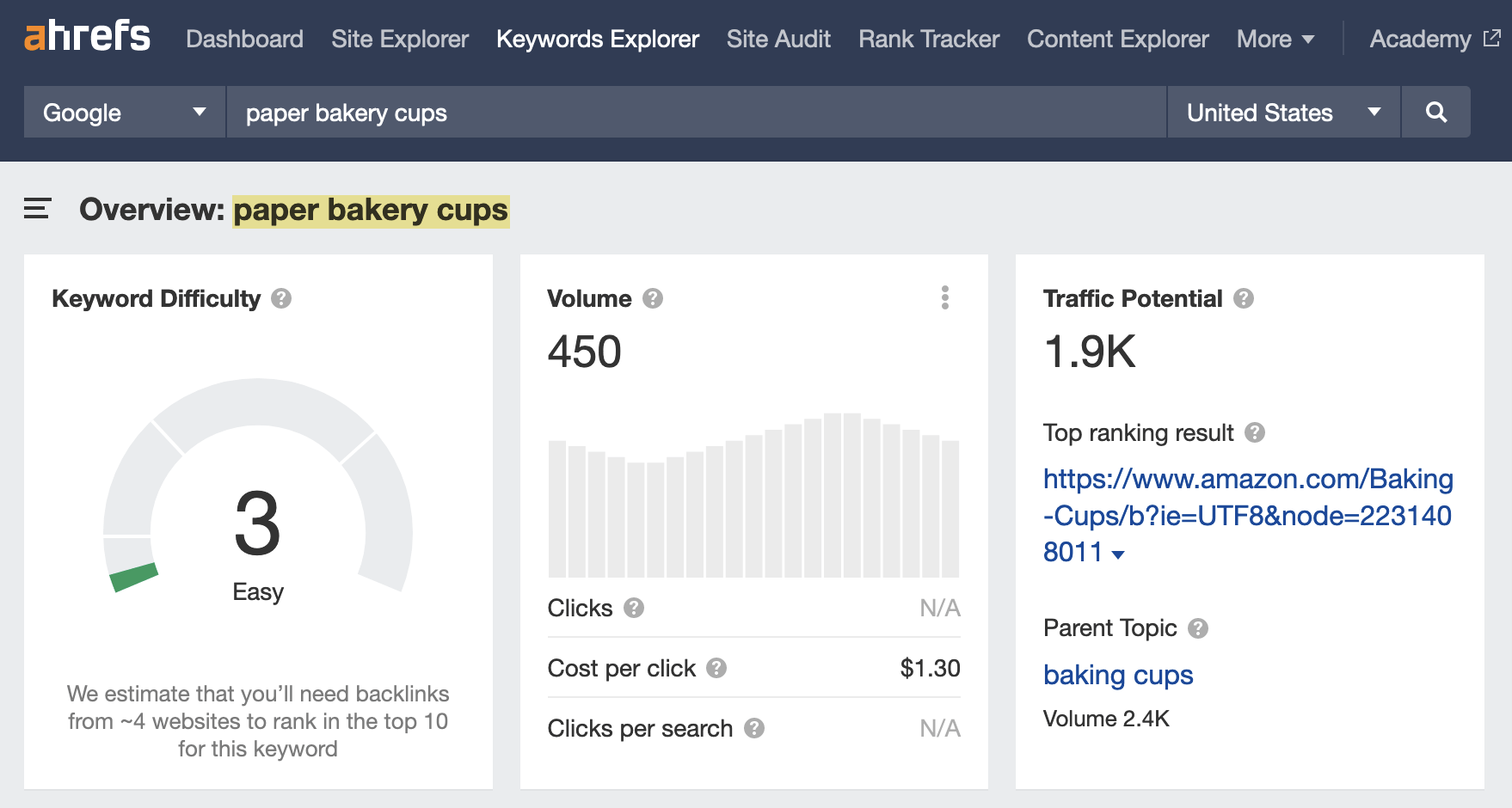
It has good business and traffic potential and looks easy to rank for based on its Keyword Difficulty (KD) score.
它具有良好的商业和流量潜力,根据其关键字难度 (KD) 分数看起来很容易排名。
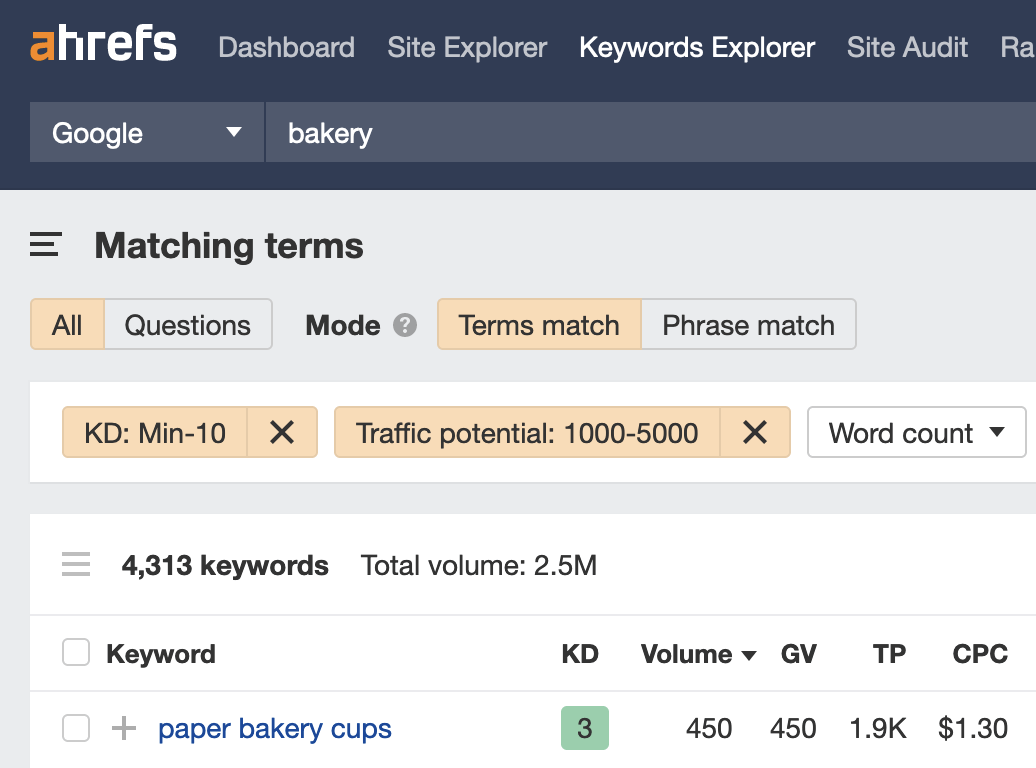
To find it, we: 为了找到它,我们:
- Plugged the seed keyword “bakery” into Ahrefs’ Keywords Explorer
将种子关键词 “bakery” 插入 Ahrefs Keywords Explorer(关键词分析)中 - Checked the Matching Terms report.
已检查 Matching Terms(匹配术语)报告。 - Filtered for keywords with good traffic potential and low KD
筛选出具有良好流量潜力和低 KD 的关键词
DID YOU KNOW? 您是否了解?
Keyword Difficulty (KD) scores in Ahrefs are based on the number of backlinks to the top-ranking pages. It’s a helpful way to refine lists of keywords. Still, it’s always worth investigating ranking difficulty further before pursuing a topic. Learn more in our Keyword Difficulty guide.
Ahrefs 中的关键词难度 (KD) 分数基于排名靠前的页面的外链数量。这是优化关键字列表的有用方法。尽管如此,在追求一个主题之前进一步研究排名难度总是值得的。在我们的关键词难度指南中了解更多信息。
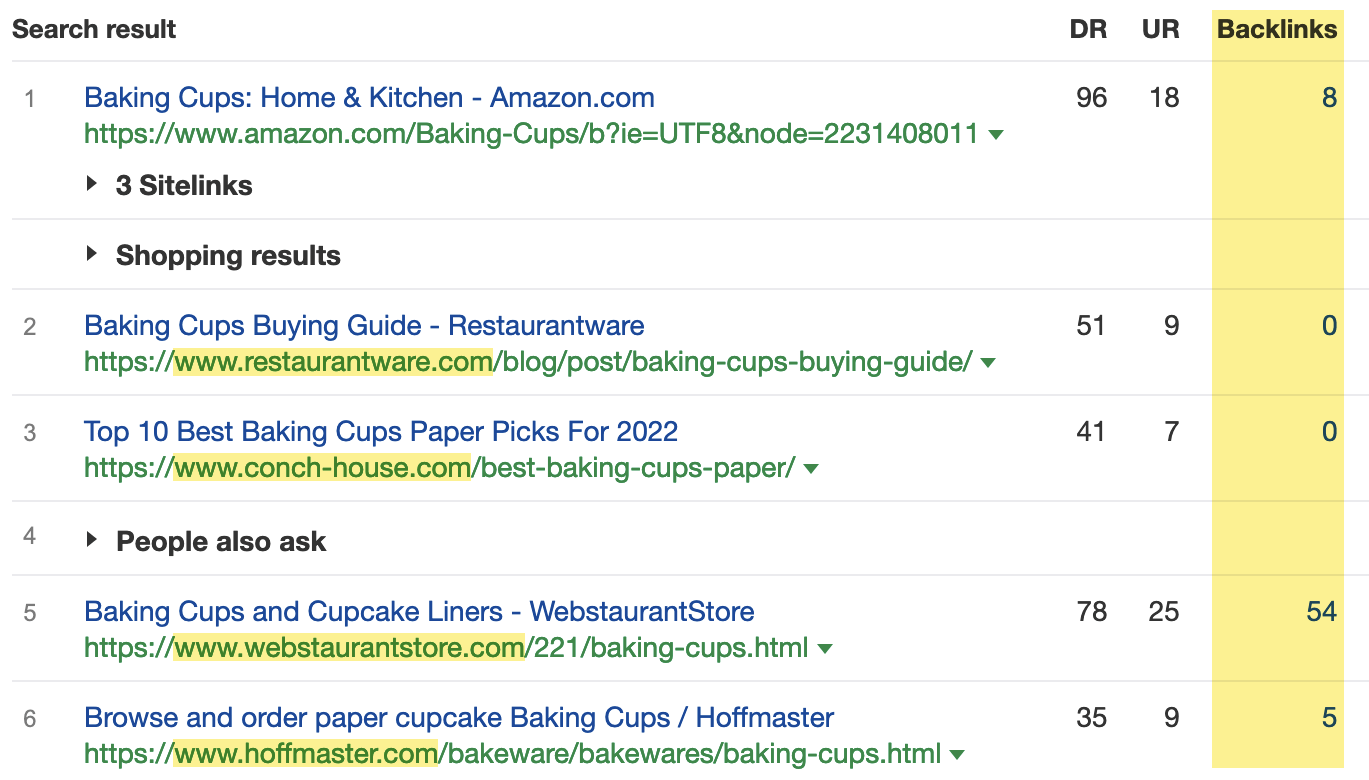
Finally, we checked the top-ranking pages and their stats in the SERP overview. As many have few or no backlinks and are from unknown brands, it seems quite a promising keyword.
最后,我们在 SERP 概览中检查了排名靠前的页面及其统计数据。由于许多外链很少或没有外链,并且来自未知品牌,这似乎是一个相当有前途的关键词。
2. Analyze search intent 2. 分析搜索意图
Understanding search intent means figuring out what the searcher is looking for. You need to do this because your chances of ranking are slim if your content doesn’t align with it.
了解搜索意图意味着弄清楚搜索者在寻找什么。你需要这样做,因为如果你的内容与它不一致,你获得排名的机会就很小。
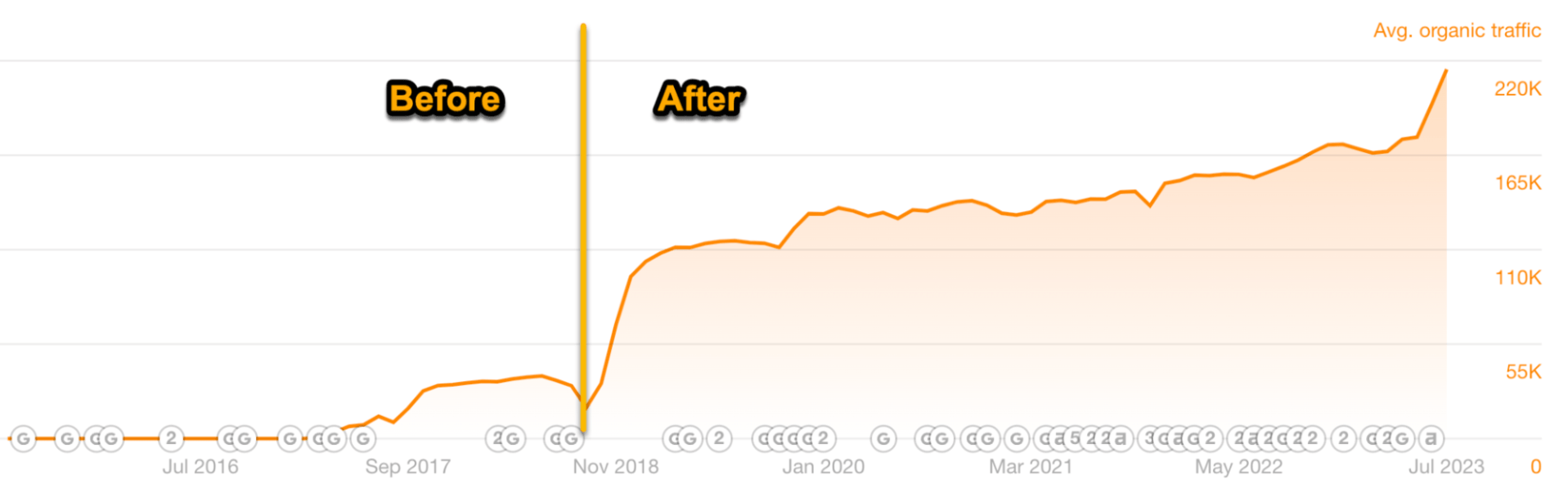
Here’s what happened to one of our blog posts after we did a better job of matching the searcher’s intent:
以下是我们在更好地匹配搜索者的意图后,我们的一篇博文发生了什么:
A keyword like “how to make espresso at home without a machine” makes it easy to guess the intent behind the search. The information is right there, in the keyword: searchers want to learn how to make great coffee, at home, without an espresso machine.
像 “how to make espresso in home without a machine” 这样的关键词 可以很容易地猜出搜索背后的意图。信息就在那里,在关键词中:搜索者想学习如何在没有浓缩咖啡机的情况下在家中制作美味的咖啡。
But the intent behind “espresso” is harder to infer from the keyword alone:
但是 “espresso” 背后的意图 很难仅从关键词中推断出来:
- Does the searcher want to buy coffee?
搜索者想买咖啡吗? - Do they want a simple definition or a detailed process for making it?
他们想要一个简单的定义还是一个详细的制作过程? - Should we write about expensive espresso machines or DIY alternatives like a mocha pot?
我们应该写昂贵的浓缩咖啡机还是摩卡壶等 DIY 替代品?
This information isn’t in the keyword, but it is in the search results. If an article is ranking well for a particular keyword, it’s probably giving searchers what they want. The existing search results can provide a roadmap to help you understand and match intent.
此信息不在关键字中,但在搜索结果中。如果一篇文章在某个特定关键词上的排名很好,那么它可能给了搜索者他们想要的东西。现有搜索结果可以提供一个路线图,帮助您了解和匹配意图。
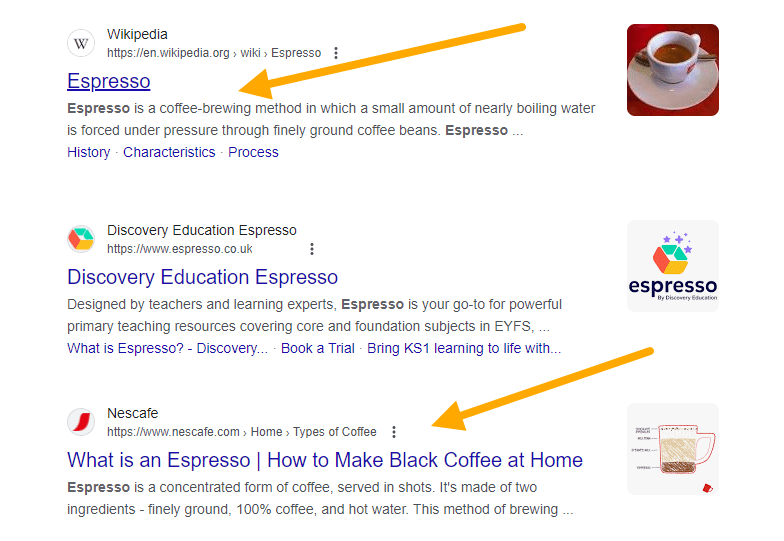
Most of the top results for “espresso” focus on definitions and simple explainers.
“espresso” 的大多数主要结果都集中在定义和简单的解释器上。
To identify search intent, look at the top-ranking results on Google and identify the three Cs of search intent:
要识别搜索意图,请查看 Google 上排名靠前的结果,并确定搜索意图的三个 C:
- Content type: what is the dominant type of content? Is it a blog post, product page, video, or something else?
内容类型:主要的内容类型是什么?它是博客文章、产品页面、视频还是其他内容? - Content format: are all the top results how-to guides? Or lists, or reviews, or comparisons?
内容格式:所有排名靠前的结果都是操作指南吗?或者列表、评论或比较? - Content angle: what approach do the top-ranking articles take? Do they all talk about the “best”, or “cheapest,” or “for beginners”?
内容角度:排名靠前的文章采用什么方法?他们都在谈论 “最好” 或 “最便宜” 或 “适合初学者” 吗?
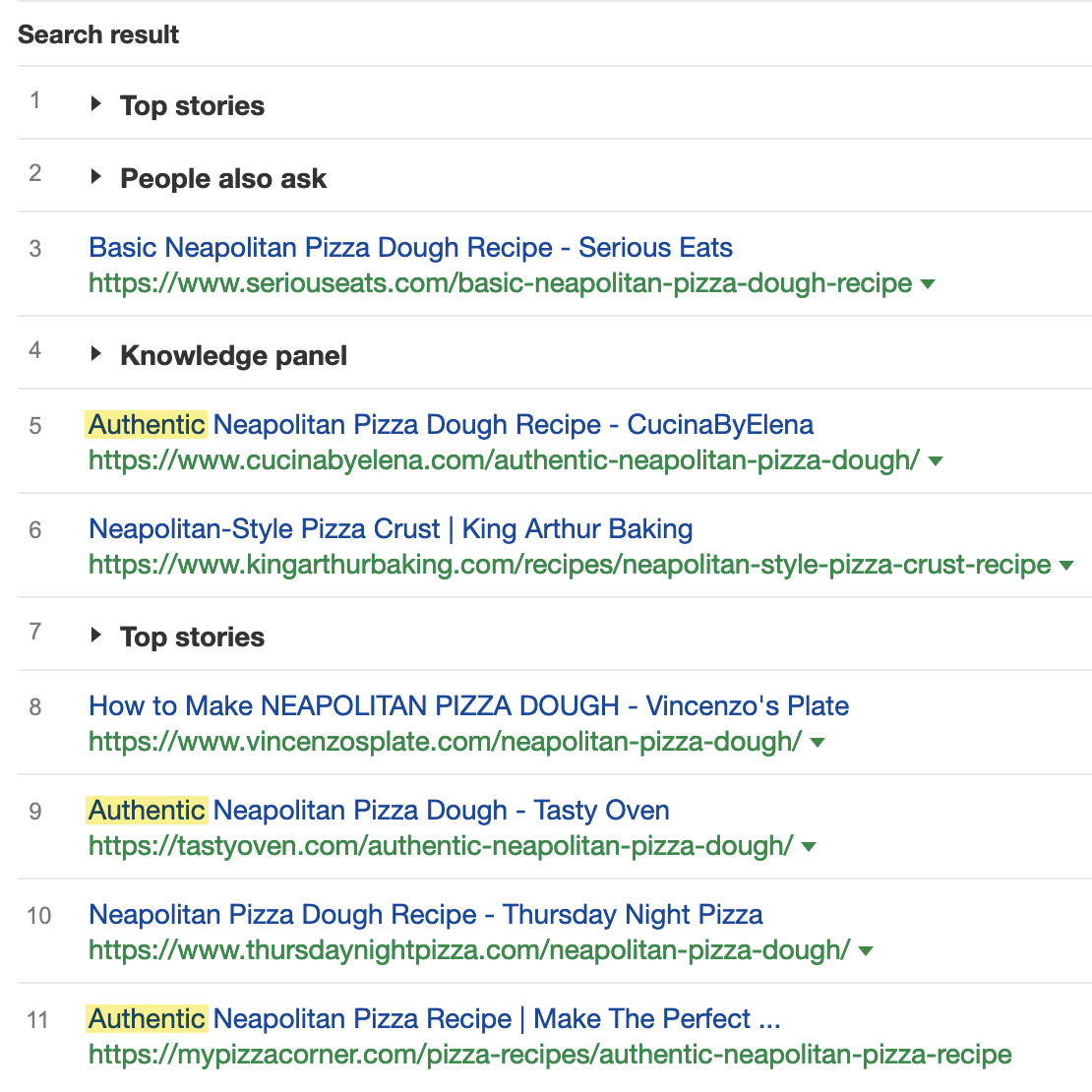
For example, the top results for “neapolitan pizza dough” are all recipe blog posts. And authenticity is the dominant angle.
例如,“neapolitan pizza dough” 的排名靠前的结果都是食谱博客文章。真实性是主导角度。
In most situations, your content should take a similar approach to the content that already ranks well (similar, but not identical—more on that below). Once you’re happy that you’re giving searchers what they want, it’s time for the nitty-gritty of on-page SEO.
在大多数情况下,您的内容应该对已经排名良好的内容采取类似的方法(相似但不完全相同 - 更多内容见下文)。一旦你对自己为搜索者提供了他们想要的东西感到满意,就该了解页面 SEO 的细节了。
TIP 提示
Some search results can contain several different types of intent (the SERP for “kiwi” includes the bird, the fruit, the airline company, and the Harry Styles song).
某些搜索结果可能包含几种不同类型的意图(“kiwi”的 SERP 包括鸟、水果、航空公司和 Harry Styles 歌曲)。
If you want to use data to help you determine which intent to target, try the “Identify intents” feature in Ahrefs.
如果你想使用数据来帮助你确定要定位的意图,请尝试 Ahrefs 中的 “Identify intents(识别意图)”功能。
Head to Keywords explorer, enter your keyword, scroll to the SERP overview and hit the Identify intents button:
前往 Keywords explorer(关键词分析),输入你的关键词,滚动到 SERP overview(SERP 概览),然后点击 Identify intents(识别意图)按钮。
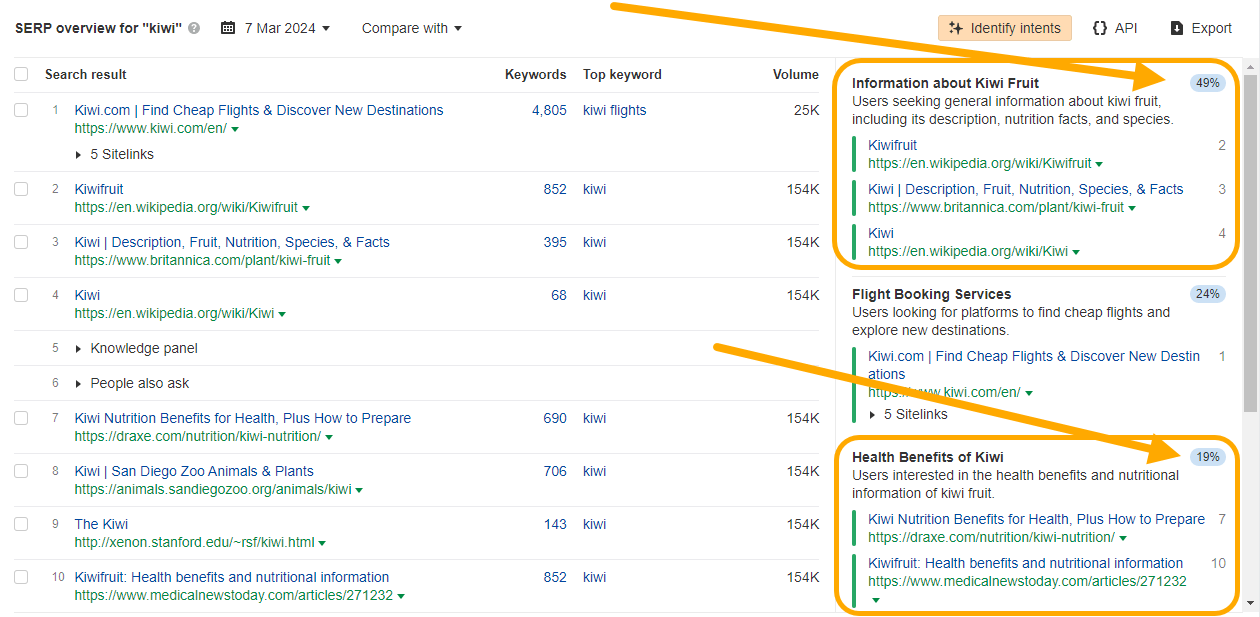
Here you can see that an estimated 49% of the traffic goes to basic information about kiwi fruits. But there’s another angle that might be worth taking: 19% of the estimated traffic cares specifically about the health benefits of eating Kiwi fruit.
在这里,您可以看到估计有 49% 的流量流向了有关猕猴桃的基本信息。但还有另一个角度可能值得考虑:19% 的估计流量特别关心 吃猕 猴桃的_健康益处_。
Learn more in our guide to search intent: Search Intent in SEO: What It Is & How to Optimize for It.
在我们的搜索意图指南中了解更多信息:SEO中的搜索意图:它是什么以及如何优化它。
3. Check your expertise 3. 检查您的专业知识
Today more than ever, Google values content that shows first-person experience of the subject matter. Here’s what they said in a recent update to their quality rater guidelines:
如今,Google 比以往任何时候都更重视展示主题第一人称体验的内容。以下是他们在最近更新的质量评估员指南中所说的话:
“Does content also demonstrate that it was produced with some degree of experience, such as with actual use of a product, having actually visited a place or communicating what a person experienced? There are some situations where really what you value most is content produced by someone who has first-hand, life experience on the topic at hand.”
“内容是否也表明它是在某种程度上的经验制作的,例如实际使用产品、实际访问过某个地方或传达一个人的经历?在某些情况下,你真正看重的是那些对手头主题有第一手生活经验的人制作的内容。
Google uses signals that help determine content that demonstrates expertise. This is especially important for topics that could impact a reader’s happiness, health, or wealth. Google calls these Your Money or Your Life (YMYL) topics.
Google 使用信号来帮助确定展示专业知识的内容。 这对于可能影响读者幸福、健康或财富的主题尤其重要。Google 将这些主题称为 Your Money or Your Life (YMYL) 主题。
As Google explains:
正如 Google 所解释的那样:
- Non-YMYL topics. “Everyday expertise” is enough. If the writer has the type and amount of life experience to make them an expert on the topic, you’re good.
非 YMYL 主题。 “日常专业知识”就足够了。如果作家具有使他们成为该主题专家的类型和数量的生活经验,那么您很好。 - YMYL topics. Formal expertise is important, but “everyday expertise” is enough for some topics. For example, someone with cancer can answer “what is it like to have cancer” better than a doctor.
YMYL 主题。 正式的专业知识很重要,但对于某些主题来说,“日常专业知识”就足够了。例如,癌症患者比医生更能回答“患癌症是什么感觉”。
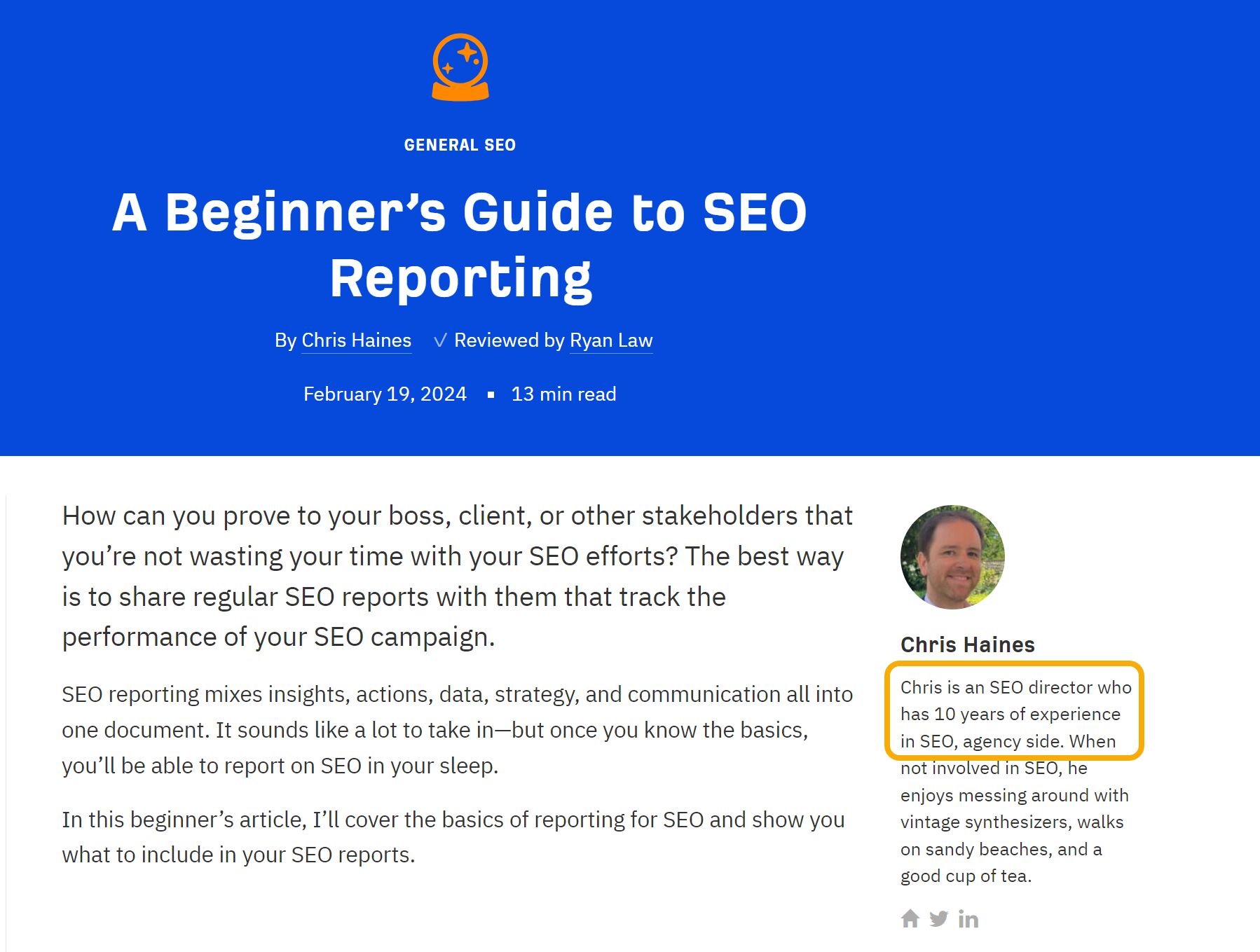
The easiest way to demonstrate first-person experience is to write about subjects you know well. For example, Chris from our blog team has years of experience running SEO at agencies at in-house companies, so he can write authoritatively on a topic like A Beginner’s Guide to SEO Reporting.
展示第一人称体验的最简单方法是写你熟悉的主题。例如,我们博客团队的 Chris拥有多年在内部公司代理机构运行 SEO 的经验,因此他可以就 A Beginner’s Guide to SEO Reporting 等主题进行权威写作。
Use the flowchart below to decide if and how to cover a topic.
使用下面的流程图来决定是否以及如何涵盖某个主题。

There are on-page elements that can help too:
页面上的元素也可以提供帮助:
- Include expert quotes. When your expertise isn’t enough to be authoritative on the subject, seek out quotes and feedback from people who are experts (especially in fields that require specific certifications and qualifications, like healthcare or accountancy).
包括专家引言。 当您的专业知识不足以在该主题上具有权威性时,请向 专家寻求报价和反馈(尤其是在需要特定认证和资格的领域,例如医疗保健或会计)。 - Get hands-on with your topic. If you’re writing about brewing espresso, actually go and brew a few hundred shots. Reviewing free CRM software? Download, install, and spend a few hours with each option. If you aren’t willing to go to these lengths, there’s a good chance you’ll be beaten by someone who will.亲身体验您的主题。 如果你正在写关于冲泡浓缩咖啡的文章,实际上去冲泡几百杯。正在查看免费的 CRM 软件?下载、安装并花几个小时使用每个选项。如果你不愿意走这些路,你很有可能被打败。
- Show evidence. Prove to readers (and Google) that you did the thing you’re talking about: add experience to your author bio, and include photographs and videos of your experience.
出示证据。 向读者(和 Google)证明你做了你正在谈论的事情:在你的作者简介中添加经验,并包括你经历的照片和视频。
4. Cover the topic in full
- 完整涵盖主题
If you’ve got expertise covered, it’s time to create the type of content searchers want to see. Analyzing search intent gives you a high-level idea of this, but it doesn’t reveal all. That’s a problem because the best result for a query covers everything searchers want to know.
如果您已经掌握了专业知识,那么是时候创建搜索者想要看到的内容类型了。分析搜索意图可以让您对此有一个高层次的概念,但它并不能揭示所有内容。这是一个问题,因为查询的最佳结果涵盖了搜索者想知道的所有内容。
If a reader clicks on an article titled How to brew perfect espresso, it’s likely they’ll feel frustrated if the article misses out important steps, like grinding beans or dosing your basket.
如果读者点击一篇题为_“如何冲泡完美浓缩咖啡_”的文章,如果文章错过了重要的步骤,比如_研磨豆_子或_给篮子加药_,他们很可能会感到沮丧。
Good search content is exhaustive: it covers all the steps of the process, lists all the resources the reader needs, and answers all the questions that need answering. It delivers on its promises and leaves no important gaps in its information.
好的搜索内容是_详尽无遗_的:它涵盖了搜索过程的所有步骤,列出了读者需要的所有资源,并回答了所有需要回答的问题。它兑现了承诺,在其信息中没有留下任何重大空白。
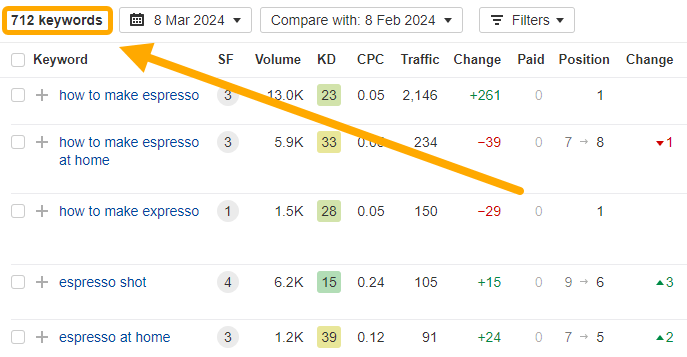
Exhaustive content is great for readers, but it also increases the likelihood that your article will rank for more keywords. In the image below, we can see an article called How to brew espresso ranking for 712 keywords, including terms like how to make espresso at home and espresso shot:
详尽的内容对读者来说是件好事,但它也增加了你的文章在更多关键词中排名的可能性。在下图中,我们可以看到一篇名为 How to brew espresso ranking 的文章,其中包含 712 个关键词,包括 how to make espresso at home 和 espresso shot 等术语:
Importantly, being exhaustive doesn’t always mean writing something very long. Content can be thorough, helpful, and short—it depends on the topic. If the reader is looking for a quick definition or—dare I say it—a recipe, thousands of words of writing can sometimes get in the way.
重要的是,详尽_并不总是意味着_写很长的东西。 内容可以是全面的、有用的和简短的——这取决于主题。如果读者正在寻找一个快速定义,或者——我敢说——一个食谱,那么成千上万的文字有时会妨碍 你。
An important part of being exhaustive is covering relevant sub-topics. Keyword research can be a big help here: in Ahrefs, head to Keywords explorer, enter your target keyword, and you can quickly find hundreds of related keywords to consider covering, including:
详尽的一个重要部分是涵盖相关的子主题。关键词研究在这里可以有很大帮助:在 Ahrefs 中,前往 Keywords explorer(关键词分析),输入你的目标关键词,你可以快速找到数百个相关关键词来考虑涵盖,包括:
- Terms match: keywords that contain all of the terms of your target keyword (“how to make espresso martini”).
**术语匹配:**包含目标关键词的所有术语的关键词(“如何制作浓缩咖啡马提尼”)。 - Questions: relevant keywords phrased as questions (“how to make espresso at home”)
**问题:**以问题形式表达的相关关键词(“如何在家制作浓缩咖啡 ”) - Also rank for: keywords that the top 10 ranking pages also rank for (“what is espresso”)
同时参与以下各项的排名: 排名前 10 的页面也参与排名的关键词 (“what is espresso”) - Also talk about: keywords frequently mention by top-ranking articles (“coffee maker”)
**另谈:**排名靠前的文章经常提到的关键词(“coffee maker”)
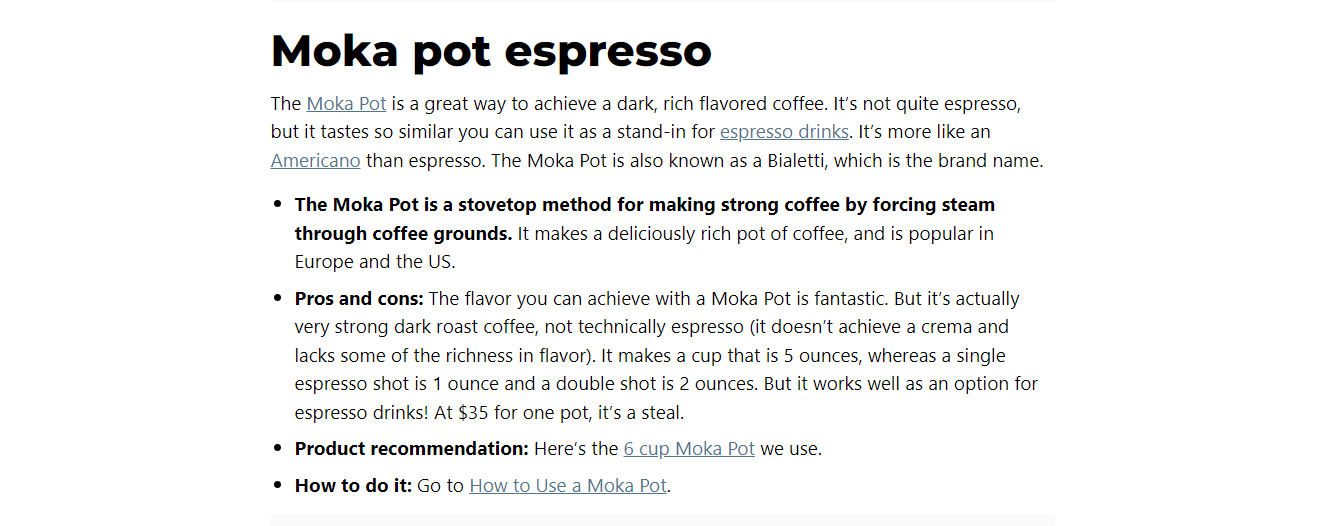
You can also read the top-ranking content for inspiration, like this section on moka pot espresso:
您还可以阅读排名靠前的内容以获取灵感,例如有关 moka pot espresso 的这一部分:
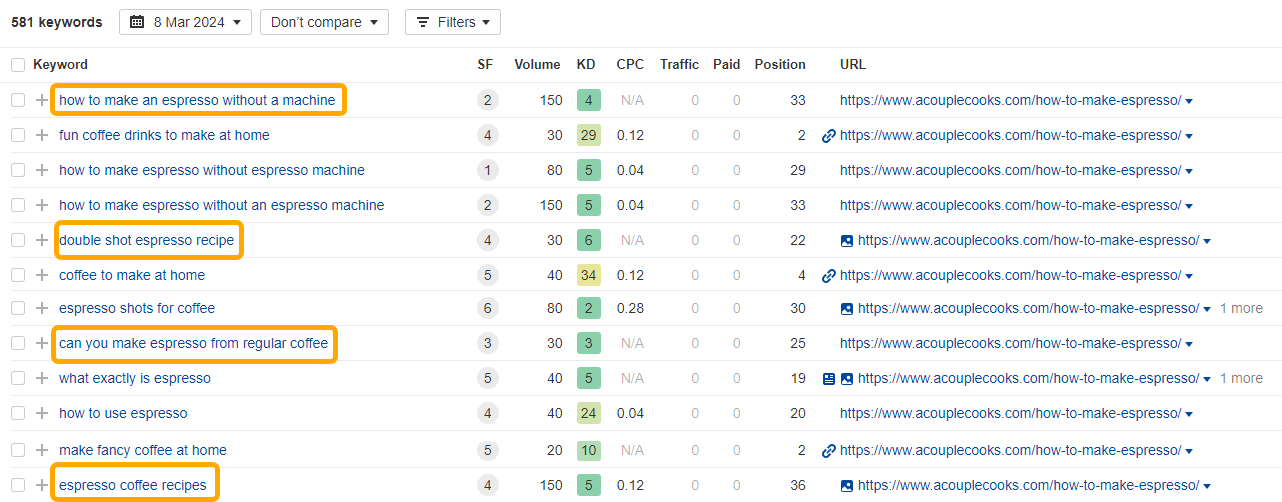
Or you can use Site explorer to look at the different keywords each article already ranks for. From this selection, it might be worth covering how to make espresso without an espresso machine:
或者你可以使用 **Site Explorer(网站分析)**来查看每篇文章已经参与排名的不同关键词。从这个选择中,可能值得介绍_如何在没有浓缩咖啡机的情况下制作浓缩咖啡_:
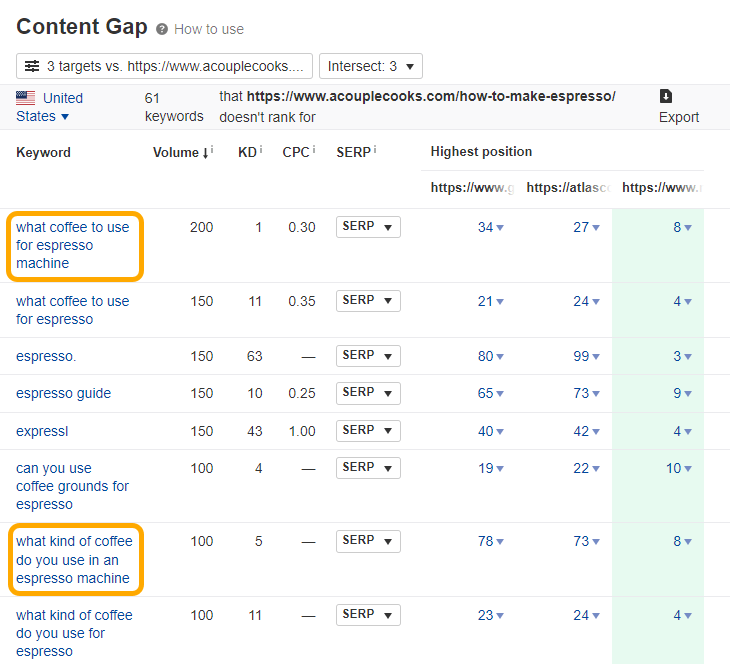
You can run this process for multiple articles using the Content Gap report. In the screenshot below, I’m comparing our article (highlighted) with three competing articles:
您可以使用 Content Gap(内容差距机会)报告为多篇文章运行此过程。在下面的屏幕截图中,我将我们的文章(突出显示)与三篇竞争文章进行了比较:
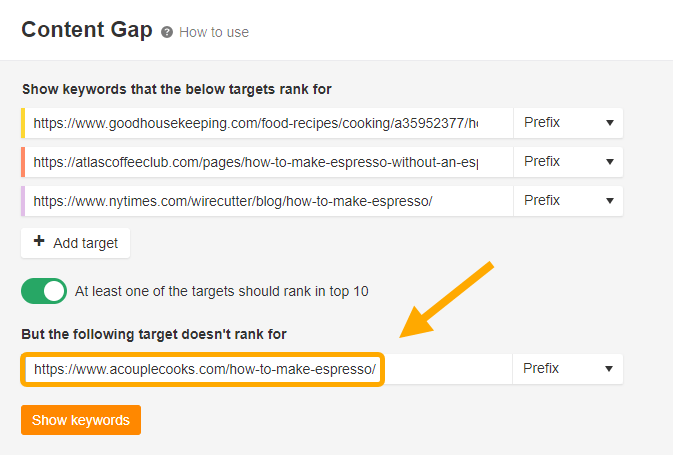
Hit “Show keywords” and you can immediately see keywords that you don’t rank for, but your competitors do. In this example, we should probably add a section talking about the type of coffee that works best in espresso machines:
点击 “Show keywords”(显示关键词),你可以立即看到你没有排名但你的竞争对手有排名的关键词。在这个例子中,我们可能应该添加一个部分来讨论在浓缩咖啡机中效果最好的咖啡类型:
And perhaps most important of all: use your common sense.
也许最重要的是:运用您的常识。
If you know from experience that a particular subtopic is crucial to mention, but can’t see any keywords or existing articles to justify it, go ahead and add it anyway. Information that helps the reader is information that helps search rankings.
如果你从经验中知道某个特定的子主题是值得提及的,但看不到任何关键词或现有的文章来证明它,那么无论如何都要添加它。帮助读者的信息是帮助搜索排名的信息。
A NOTE ON ON-PAGE OPTIMIZATION TOOLS
关于页面优化工具的说明
On-page SEO tools can be helpful for identifying sub-topics—with one important caveat.
页面 SEO 工具有助于识别子主题——但有一个重要的警告。
If you take all of their recommendations at face value, it’s very easy to create content that’s a nonsensical mish-mash of everyone else’s content, or worse—horribly and obviously keyword-stuffed.
如果你只从表面上看他们的所有推荐,就很容易创建出与其他人的内容毫无意义的大杂烩的内容,或者更糟糕的是——可怕且明显充满关键字的内容。
I like to use on-page optimization tools as an extra source of possible topics to include in my content outline. If my article is exhaustive, I don’t worry about whether it scores a B- or an A+.
我喜欢使用页面优化工具作为可能主题的额外来源,以包含在我的内容大纲中。如果我的文章详尽无遗,我不会担心它的得分是 B- 还是 A+。
Learn why here: Do Higher Content Scores Mean Higher Google Rankings? Our Data Says It’s Unlikely.
在此处了解原因: 更高的内容分数意味着更高的 Google 排名吗?我们的数据表明这不太可能。
5. Make it unique 5. 让它独一无二
If you base the entirety of your content on top-ranking pages, you’ll end up with copycat content. This content fails to stand out from the crowd or offer anything unique.
如果你把你的全部内容都建立在排名靠前的页面上,你最终会得到山寨内容。这些内容未能从人群中脱颖而出或提供任何独特之处。
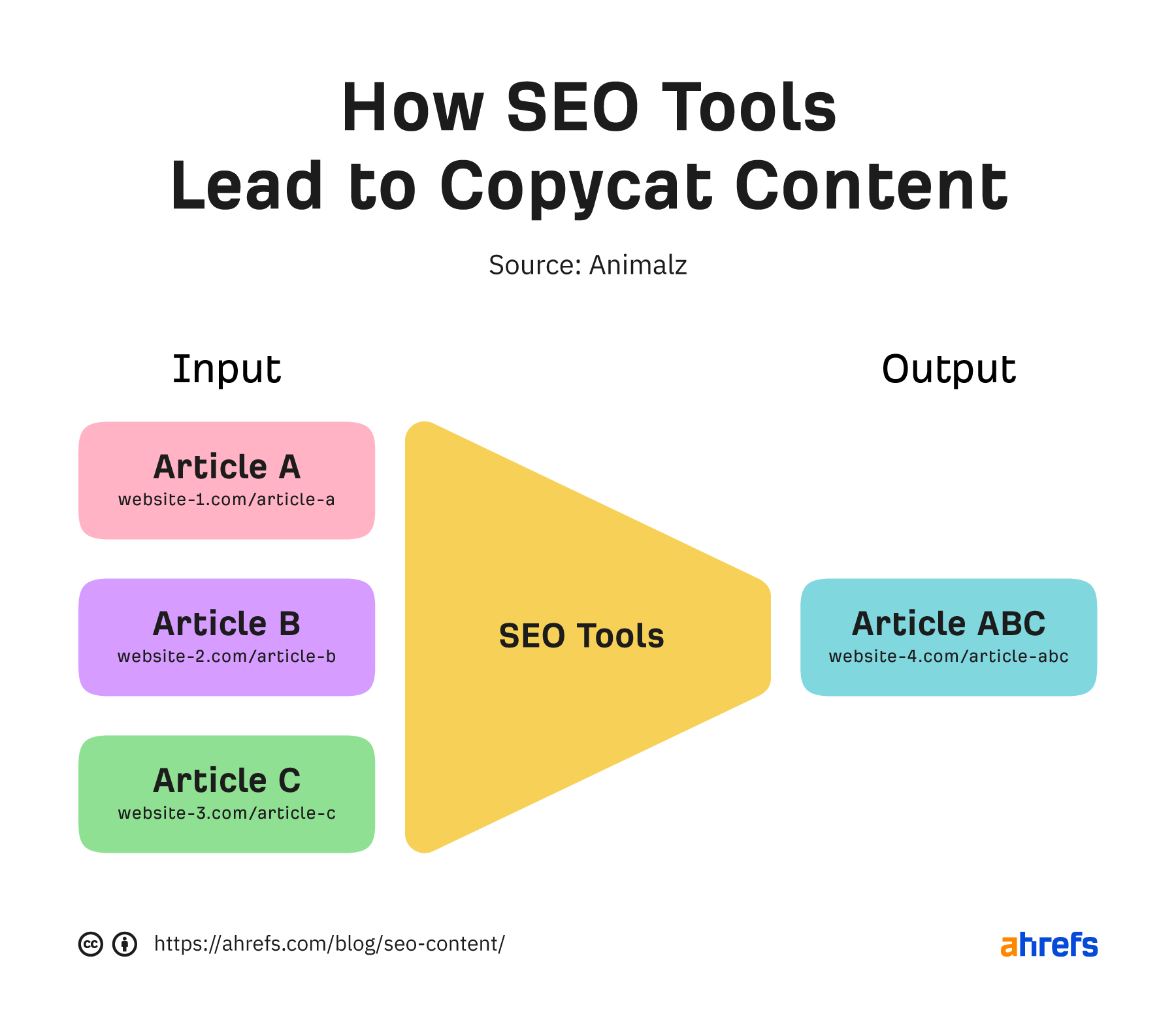
Copycat content is a problem for SEO because people have no incentive to link to it. And links are important because they’re a ranking factor.
山寨内容对 SEO 来说是一个问题,因为人们没有动力链接到它。链接很重要,因为它们是一个排名因素。
Whatever you want to call it—information gain, uniqueness, value-add—the answer is straightforward: offer something that can’t be found anywhere else:
无论您想怎么称呼它 — 信息增益、独特性、增值 — 答案都很简单:提供在其他任何地方都找不到的东西:
- Cover subtopics no one else has covered: “The most overlooked factor in great espresso…”
涵盖其他人没有涵盖的子主题:“优质浓缩咖啡中最容易被忽视的因素…” - Share an expert opinion or personal experience: “Machine espresso is overrated because…”
分享专家意见或个人经验:“机器浓缩咖啡被高估了,因为…” - Run an experiment: “I brewed all my coffee with an Aeropress for a month…”
运行一个实验:“我用爱乐压 冲泡了一个月的所有咖啡…” - Provide original data through polls, surveys, and studies: “I surveyed twenty baristas and found…”
通过民意调查、调查和研究提供原始数据:“我调查了 20 名咖啡师, 发现…” - Interview subject matter experts: “I spoke to a World Brewer’s Cup champion…”
采访主题专家:“我与一位 World Brewer’s Cup 冠军交谈过…”
If you use the Best by links report in Ahrefs’ Site Explorer to see our most linked blog posts, most of them are studies. This shows just how effective original research can be for earning backlinks in our industry.
如果你使用 Ahrefs Site Explorer(网站分析)中的 Best by links(按链接数量排序)报告来查看我们链接最多的博客文章,其中大多数都是研究。这表明原创研究在我们行业中赚取反向链接是多么有效。
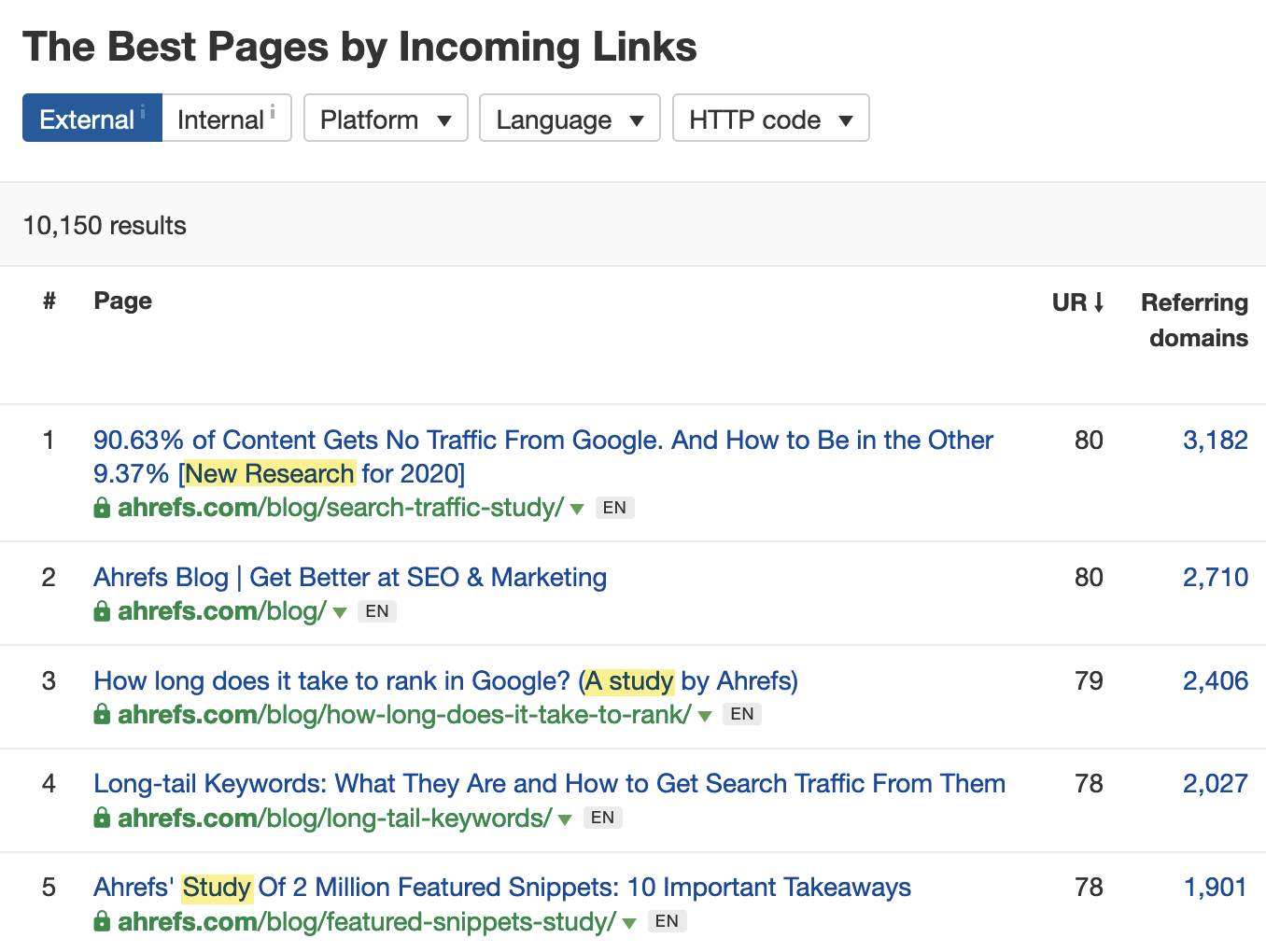
Another tip is to look at why people link to top-ranking pages.
另一个提示是查看人们为什么链接到排名靠前的页面。
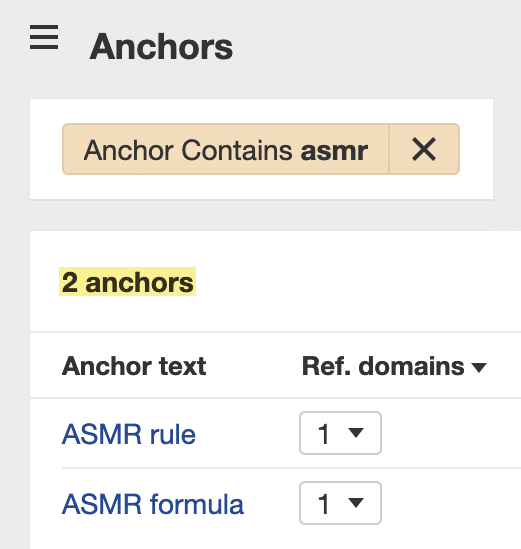
For example, we found links to a competing page about SEO copywriting thanks to a formula coined by the author. So we created our own called the ASMR formula for our post. It’s already earned us a few links.
例如,由于作者创造的公式,我们找到了一个关于 SEO 文案的竞争页面的链接。因此,我们为我们的帖子创建了自己的 ASMR 公式。它已经为我们赢得了一些链接。
DID YOU KNOW? 您是否了解?
Google is aware of the issues with copycat content. They even filed a patent in 2020 with a potential solution. It’s called Contextual Estimation of Link Information Gain. It presents a solution whereby documents are given information gain scores. These state how much more information one source may bring to a person who has seen other sources on the same topic.
Google 已意识到山寨内容存在的问题。他们甚至在 2020 年申请了一项专利,并提出了潜在的解决方案。它被称为链接信息增益的上下文估计。它提出了一种解决方案,通过该解决方案,文档可以获得信息增益分数。这些说明了一个来源可以为看过同一主题的其他来源的人带来多少更多信息。
6. Make it “sticky” 6. 让它“粘”
People aren’t going to stick around for something they find confusing or hard to read. That’s bad because Google uses interaction data to assess relevance. If searchers abandon your content like the Titanic, that’s unlikely to help SEO.
人们不会因为他们觉得令人困惑或难以阅读的东西而留下来。这很糟糕,因为 Google 使用交互数据来评估相关性。如果搜索者像泰坦尼克号一样放弃你的内容,那不太可能对 SEO 有所帮助。
Here are a few tips for making content more “sticky”:
以下是一些使内容更 “粘性” 的技巧:
- Keep it simple. Avoid complex words and sentences.
保持简单。 避免使用复杂的单词和句子。 - Make it visual. Break up walls of text with images and videos.
让它可视化。 用图像和视频打破文字墙。 - Speak your audience’s language. Use terms and jargon that resonate with readers.
说听众的语言。 使用能引起读者共鸣的术语和行话。 - Boss your spelling. Run a spell check; it makes all the difference.
**控制你的拼写。**运行拼写检查;它让一切变得不同。
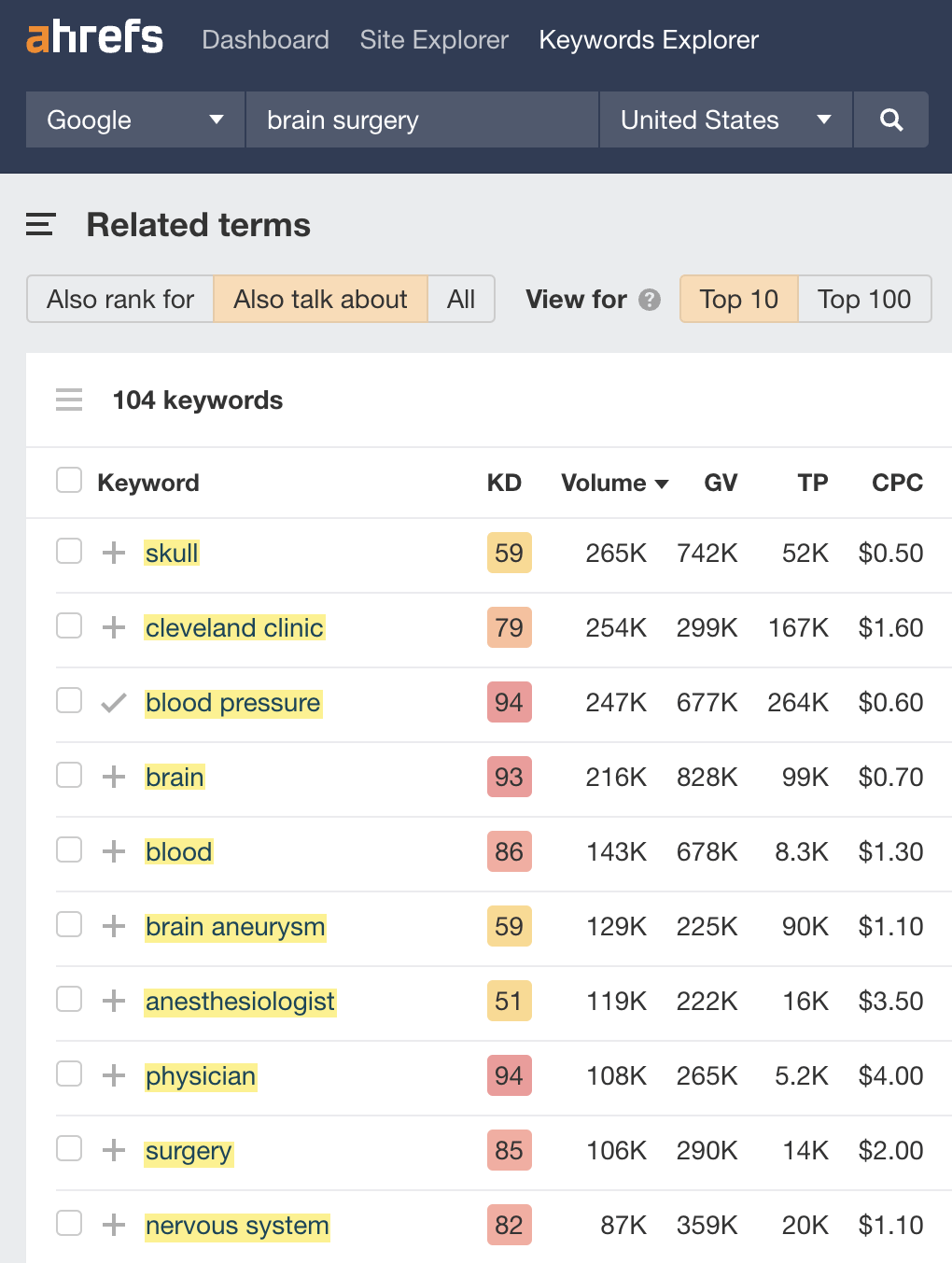
Tools like Hemmingway and Grammarly can help with simplification and spell checks. If you’re curious what kind of language and terms your audience might use, try this:
Hemmingway 和 Grammarly 等工具可以帮助简化和拼写检查。如果您想知道您的受众可能会使用哪种语言和术语,请尝试以下操作:
- Enter your keyword into Ahrefs’ Keywords Explorer
在 Ahrefs Keywords Explorer(关键词分析)中输入你的关键词 - Go to the Related terms report
转至 Related terms 报告 - Click the “Also talk about” toggle
点击 “Also talk about” 切换开关
7. Keep it evergreen 7. 让它常青
Content doesn’t stay fresh forever. That’s an issue if you’re targeting a fast-moving topic. It means you’ll have to work to keep your content updated to keep Google and searchers happy.
内容不会永远保持新鲜。如果你的目标是一个快速发展的主题,那就是一个问题。这意味着您必须努力保持您的内容更新,以使 Google 和搜索者满意。
For example, the estimated traffic trend for our list of top Google searches goes up and down.
例如,我们的 Google 热门搜索列表的估计流量趋势会上升和下降。
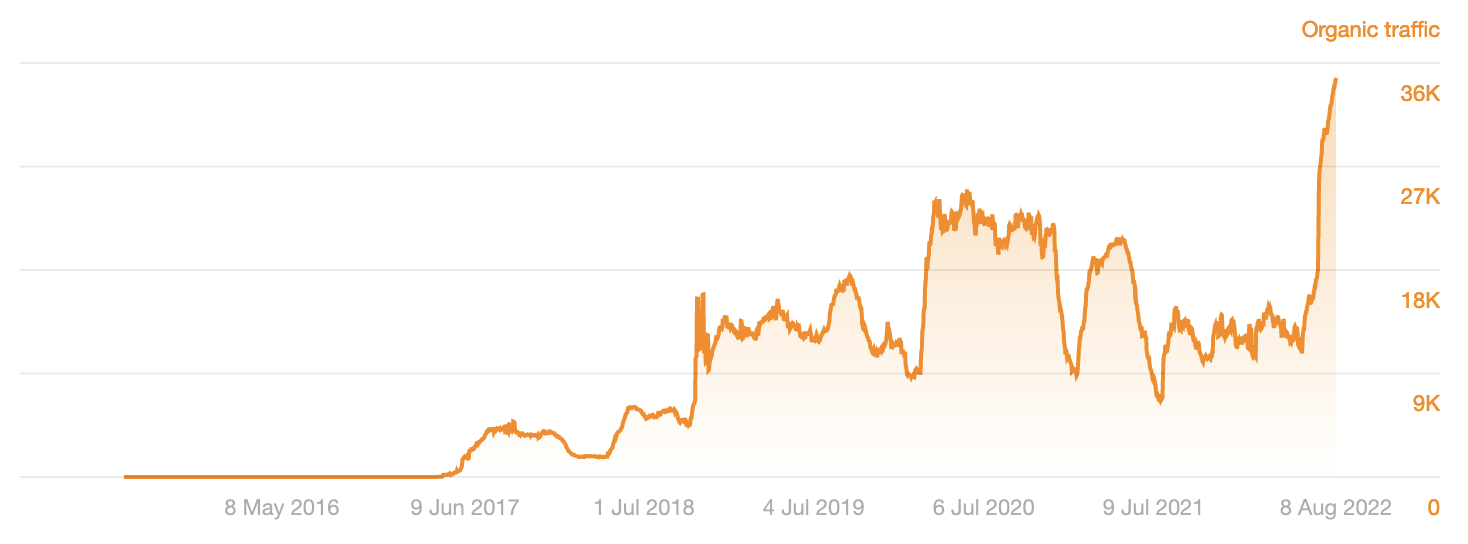
This happens because the topic demands fresh content. Searchers don’t want a list of the top Google searches from yesteryear; they want something up to date. Each dip happened when our content became stale, and each rise happened when we updated the page.
发生这种情况是因为该主题需要新鲜的内容。搜索者不想要过去的热门 Google 搜索列表;他们想要一些最新的东西。每次下降都发生在我们的内容变得过时时,而每次上升都发生在我们更新页面时。
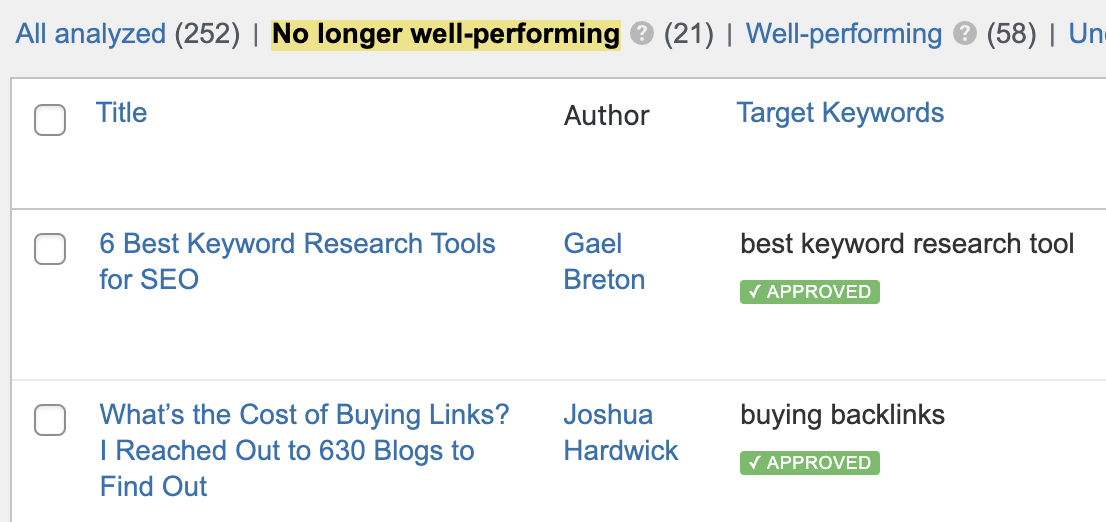
If you’re a WordPress user, you can keep an eye on declining rankings with our free WordPress SEO plugin. Just set a target keyword for each page, and it’ll tell you if rankings start to tank. You can then investigate whether this is because the content needs refreshing.
如果您是 WordPress 用户,您可以使用我们的免费 WordPress SEO 插件密切关注排名下降。只需为每个页面设置一个目标关键词,它就会告诉你排名是否开始下降。然后,您可以调查这是否是因为内容需要刷新。

- Complete Guide to Search Intent
Search Intent 完整指南 - 7 Steps to Create Search-Optimized Content
创建搜索优化内容的 7 个步骤 - 13 Content Writing Tips 13 个内容写作技巧
- 13 SEO Copywriting Tips 13 个 SEO 文案写作技巧
Key takeaways 关键要点
- SEO content is content designed to rank in search engines like Google.
SEO 内容是旨在在 Google 等搜索引擎中排名的内容。 - It’s all about giving searchers what they want, bringing new information to the discussion, and making it as “sticky” as possible.
这一切都是为了给搜索者他们想要的东西,为讨论带来新的信息,并使其尽可能地“粘性”。 - Unless you do this, your content probably won’t rank.
除非你这样做,否则你的内容可能不会排名。

Article by 文章作者
[
Joshua Hardwick 约书亚·哈德威克
](https://ahrefs.com/blog/author/joshua-hardwick/ “Posts by Joshua Hardwick”)
Contributors 贡献
[

](https://ahrefs.com/blog/author/sam-oh/ “Sam Oh”)[

](https://ahrefs.com/blog/author/ryan-law/ “Ryan Law”)
Head of Content @ Ahrefs (or, in plain English, I’m the guy responsible for ensuring that every blog post we publish is EPIC).
内容主管 @ Ahrefs(或者,用简单的英语来说,我是负责确保我们发布的每篇博文都是 EPIC 的人)。
SEARCH 搜索
English 英语
© 2024 Ahrefs Pte Ltd.
© 2024 Ahrefs 私人有限公司
PICK A TOPIC 选择一个主题
SEO 这
- General SEO 通用 SEO
- Keyword Research 关键词研究
- On-Page SEO 页面搜索引擎优化
- Link Building 链接建设
- Technical SEO 技术 SEO
- Local SEO 本地搜索引擎优化
- Enterprise SEO 企业搜索引擎优化
Marketing 营销
- General Marketing 一般营销
- Content Marketing 内容营销
- Affiliate Marketing 联盟营销
- Paid Marketing 付费营销
- Video Marketing 视频营销
AHREFS TOOLS AHREFS TOOLS(亚 AHREFS 工具)
Core Tools 核心工具
- Site Explorer 网站分析
- Keywords Explorer Keywords Explorer(关键词分析)
- Content Explorer 内容分析
- Site Audit 网站诊断
- Rank Tracker 排名跟踪器
Free Tools 免费工具